Products / Bag Filter Sizing
How to size a bag filter housing: flow rate per #1 and #2 filter bag, micron rating selection by application, single versus multi-bag vessels, pressure-drop limits and viscosity corrections.
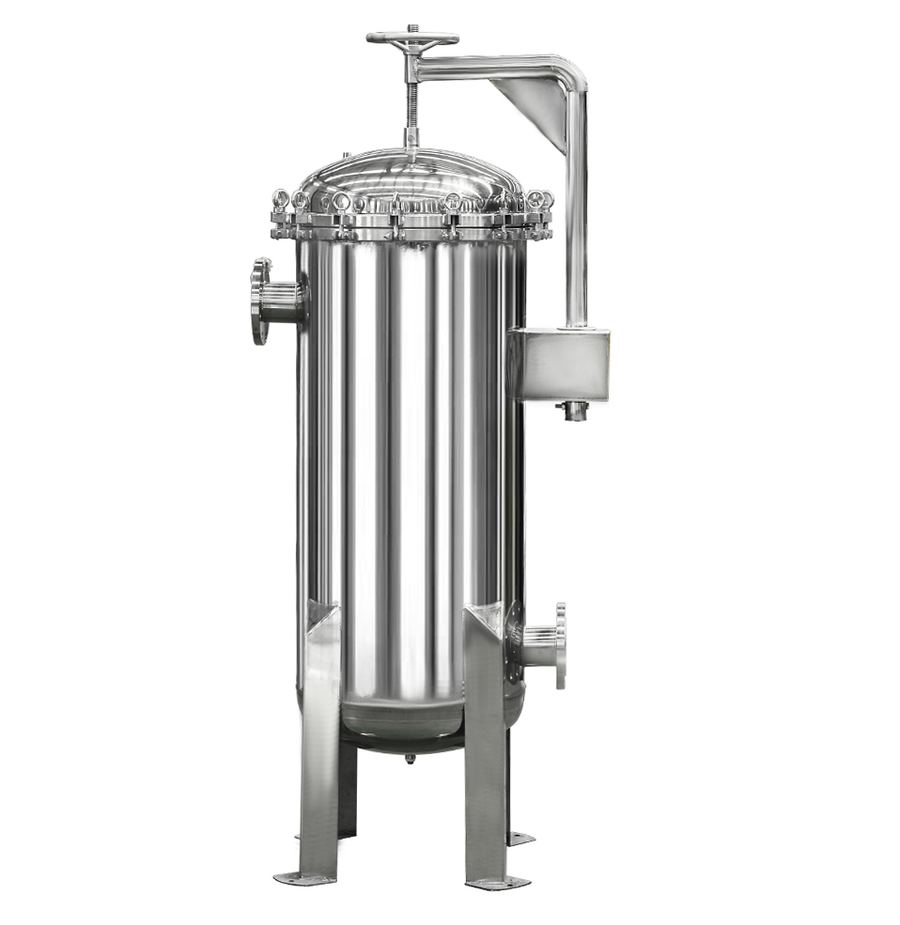
Bag filter housing sizing comes down to three questions: how much liquid you must filter per hour, what particle size you must remove, and how often you are willing to stop and change a bag. Get the vessel size right and the bags last, the pressure drop stays low and the pump runs easy; get it wrong and you change bags every shift or bleed pressure through the system.
The rule of thumb: one #1 filter bag (φ180 × 430 mm) handles up to about 12 m³/h on clean water, and one #2 bag (φ180 × 810 mm) up to about 25 m³/h. Design at 60–80% of those figures and the clean pressure drop stays near 0.03 MPa, so the bag reaches its full dirt-holding capacity before it blinds. Multi-bag housings simply multiply the per-bag figures — a 4-bag vessel sized at 60 m³/h runs the same gentle duty as a single bag at 15 m³/h.
The tables below are the same figures our engineers use when sizing vessels for overseas buyers. If your liquid is viscous, hot or loaded with solids, or you would rather have a professional check the numbers, send us the flow rate, the liquid and its temperature, and the micron rating — our engineers will size the housing free of charge, usually within one working day.
| Single bag, #1 (φ180 × 430 mm) | Recommended ≤ 8 m³/h · max 12 m³/h |
|---|---|
| Single bag, #2 (φ180 × 810 mm) | Recommended ≤ 16 m³/h · max 25 m³/h |
| 2-bag housing (2 × #2) | Recommended ≤ 32 m³/h · max 50 m³/h |
| 4-bag housing (4 × #2) | Recommended ≤ 64 m³/h · max 100 m³/h |
| 6-bag housing (6 × #2) | Recommended ≤ 96 m³/h · max 150 m³/h |
| 8-bag housing (8 × #2) | Recommended ≤ 128 m³/h · max 200 m³/h |
| Clean pressure drop at recommended flow | ≤ 0.03–0.05 MPa (4–7 PSI) |
| Recommended bag change-out | 0.10–0.15 MPa (15–20 PSI) differential |
| Filtration rating | 0.5–200 µm (set by the bag media) |
| Design pressure | 0.6 / 1.0 / 1.6 MPa (150 / 225 PSI), higher on request |
| Viscosity correction | Above about 100 cP, divide the water figures by 2–3 |
Specifications above are our standard range. Custom sizes, materials, ports and pressure ratings are available — please send your working conditions for a tailored offer.
Match the bag to the particle you actually need to remove
Catches lint, fibre, scale, weld slag and large solids ahead of pumps, spray nozzles and finer filters. The cheapest stage — put the coarse work here, not on expensive fine bags.
The workhorse range for process water, coatings, coolants, petrochemical streams and food & beverage. Most buyers size their first vessel in this band; 50 µm is the single most common rating we export.
Guards RO membranes, UV systems, ion-exchange resin and cartridge polishers. Use it as a second, staged step after a coarse bag rather than alone — a fine bag on raw water blinds within hours.
Bag media becomes uneconomic below about 5 µm. Use a stainless cartridge filter housing as the final polishing stage; keep the bag vessel upstream as the low-cost workhorse.
Not sure which model fits your project? Send us your flow rate, liquid and filtration requirement — our engineers will recommend the right configuration, free of charge.
Get Free Selection Advice
Common questions from overseas buyers about bag filter housing sizing guide — click a question to expand.
On clean water at ambient temperature: a #1 bag (φ180 × 430 mm) up to about 12 m³/h and a #2 bag (φ180 × 810 mm) up to about 25 m³/h. We recommend sizing the vessel at 60–80% of those figures so the clean pressure drop stays around 0.03 MPa and the bag uses its full dirt-holding capacity before it blinds.
Start from the particle you must remove, not from the finest bag available: 100–200 µm for coarse protection, 25–75 µm for general process duty, 5–25 µm to protect RO membranes and UV systems. Filter in stages — a coarse bag upstream lets a fine bag last many times longer. Below about 5 µm, switch to cartridge filtration.
Roughly when flow exceeds 20–25 m³/h, or when change-outs would interrupt production. A 4-bag vessel at 60 m³/h gives each bag the same gentle duty as a single bag at 15 m³/h, and bags can be changed one at a time without shutting down the process. Multi-bag housings also save floor space and piping compared with several single vessels in parallel.
A clean housing runs at 0.02–0.05 MPa differential. Plan the change-out at 0.10–0.15 MPa (about 15–20 PSI) across the vessel — at that point the bag is approaching full capacity and pushing harder only risks solids bypassing the seal. Fit a differential-pressure gauge so the crew can read the condition at a glance.
Yes, significantly. Above about 100 cP (oils, syrups, resins, glycols), divide the water flow figures by 2 to 3, because viscous liquids move through the bag media much more slowly and the pressure drop rises faster. Temperature helps — hot syrup flows easier — but the seal material must then match the duty (Viton or PTFE above 100 °C).
Yes — that service is free. Send four details: flow rate in m³/h, the liquid and its operating temperature, the filtration rating in microns, and the connection standard you use (ANSI, DIN, JIS or clamp). Our engineers reply with the recommended bag size, bag count, material and pressure rating, normally within one working day.
Usually yes, within reason. A vessel is the durable part — bags are the consumable. Choosing the next size up, or a 4-bag frame where you currently need 2 bags, costs little now and avoids replacing the vessel when the plant expands. Tell us your expected future flow and we will design the flange and nozzle sizes so the upgrade needs no re-piping.
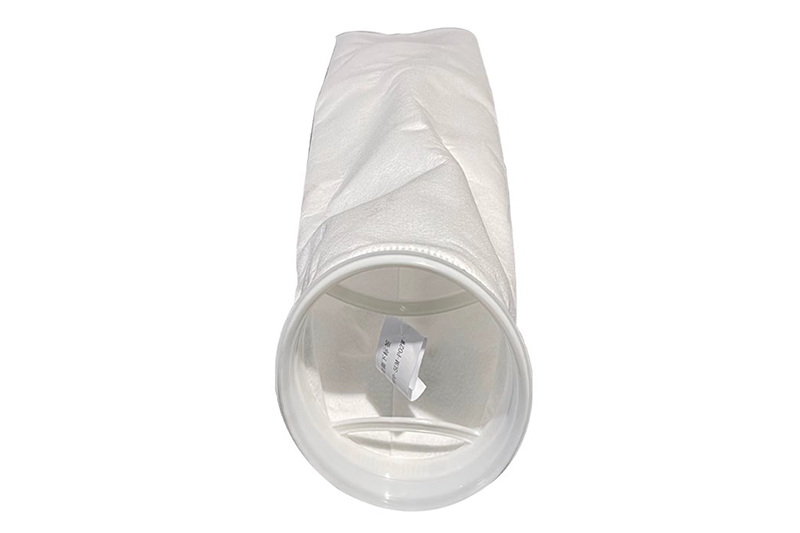
Filter bags in various micron ratings for all standard bag housings.
View Details →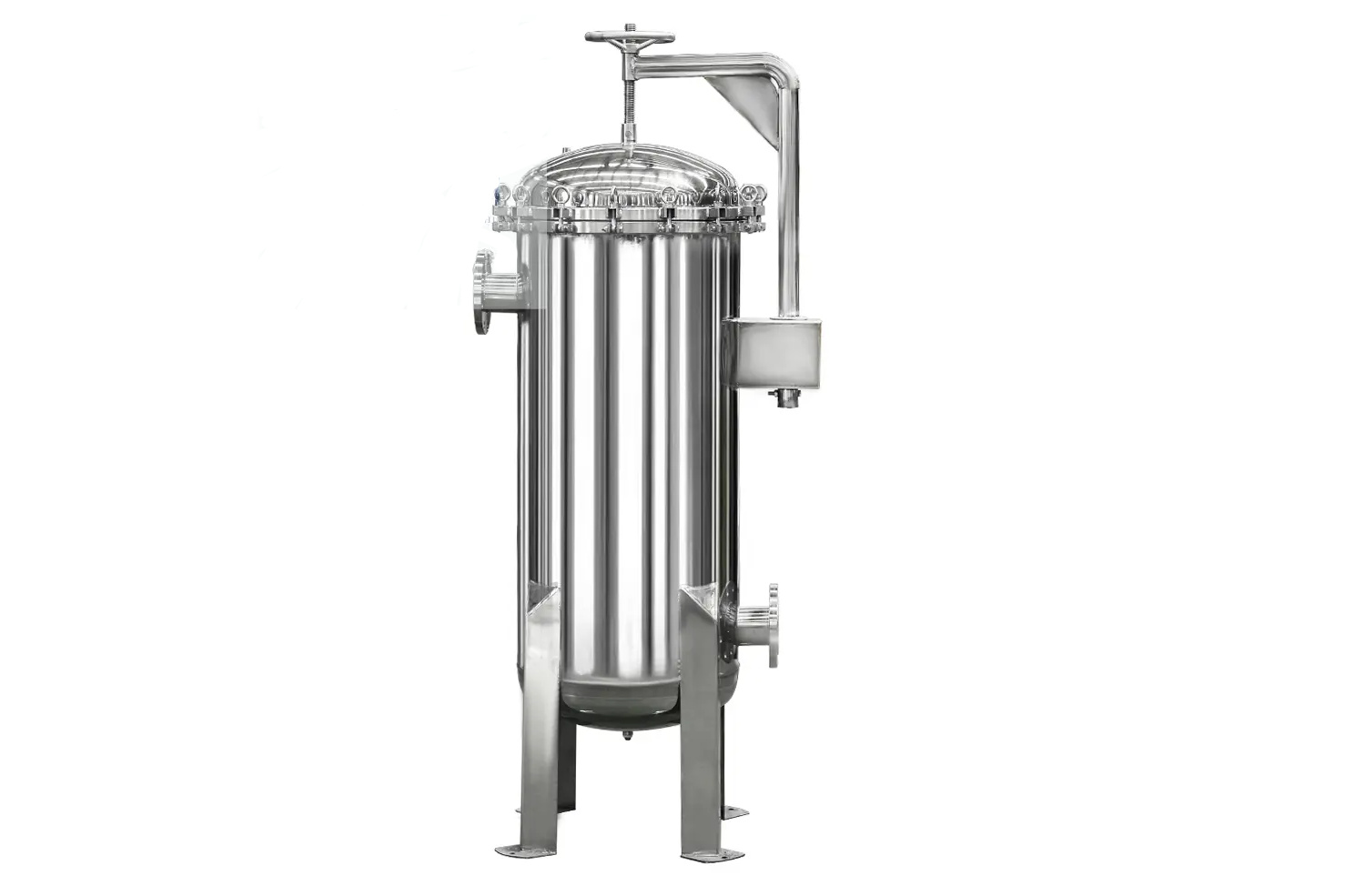
Stainless steel single bag filter with quick-opening design.
View Details →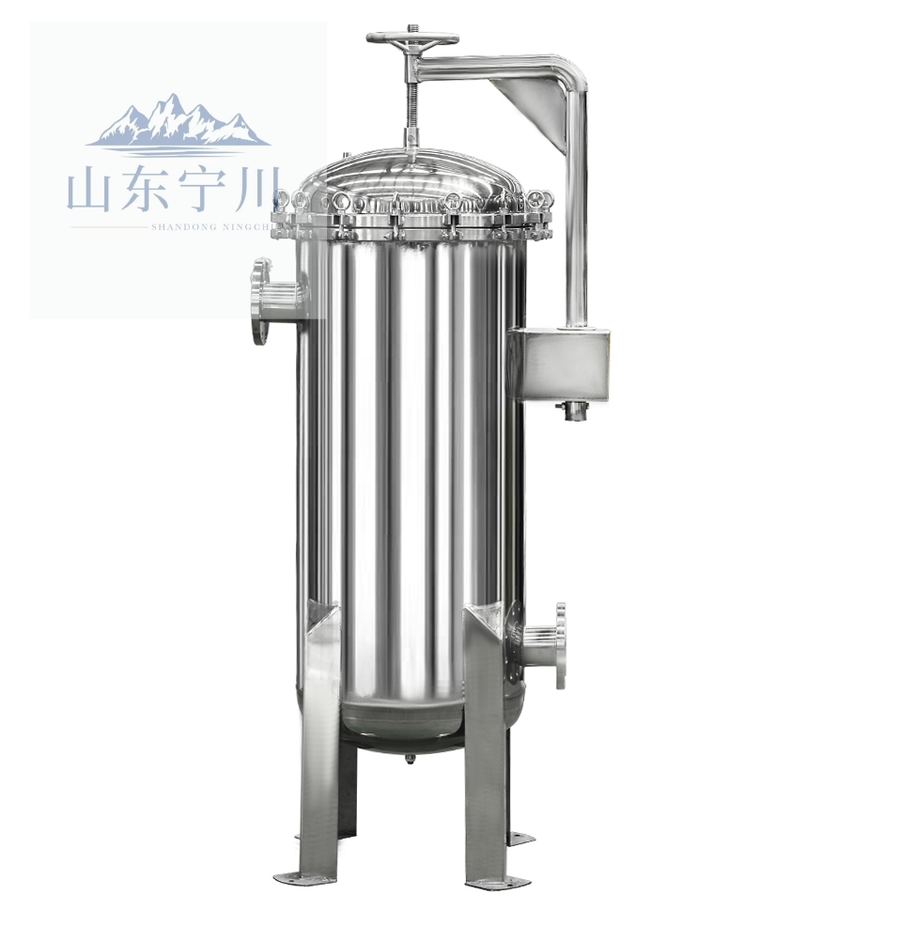
High flow 6-bag filter housing for large volume filtration.
View Details →Sanitary stainless steel bag filter housing, widely used across industries.
View Details →